

In 2025, social media marketing is the best way of increasing a brand. Short videos, in particular, are taking over the online platform. Two platforms that take the lead here are YouTube Shorts and Instagram Reels. Most marketers wonder: Which one sends more traffic to your brand? We will compare the two platforms, talk about their advantages, and tell you which one is right for your business here in this blog.
- What Are Instagram Reels and YouTube Shorts?
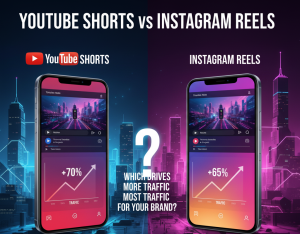
To see them side by side, let’s discover what they are.
YouTube Shorts: They are short video content up to 60 seconds, created specifically for mobile viewing. YouTube Shorts are played on a separate “Shorts” tab and are intended to engage viewers with quick, fun, or useful content.
Instagram Reels: Reels are the Instagram version of short videos, lasting 15–90 seconds. They appear on your profile, Reels tab, and the Explore page. Reels promote trends, creativity, and interactive content.
Both sites are looking to engage individuals and drive traffic but in different ways.
- Audience and Reach
The audience is the first that must be decided on.
YouTube Shorts: YouTube has over 2.5 billion monthly active users, and Shorts are

quickly gaining popularity. YouTube is synonymously associated with search-friendly content, so viewers often find Shorts when they are looking for information, tutorials, or entertainment. This makes it easy to drive organic traffic to your brand or site.
Instagram Reels: Instagram boasts over 2 billion monthly active accounts. Reels are ideal for creating a viral hit and engaging a younger audience. Reels are more likely to appear on the Explore page, so your brand will get to new potential followers in a flash.
Verdict: Shorts will deliver more search-driven traffic, while Reels excel at viral reach and brand awareness.
- Algorithm and Visibility
Both websites have algorithms that dictate which content is viewed by the users.

YouTube Shorts Algorithm: Shorts are recommended by YouTube on the basis of watch time, engagement, and relevance. If your Short is well-performing, then it can be shown on the homepage, Shorts shelf, or even suggested on related videos, expanding your reach.
Instagram Reels Algorithm: Instagram prioritises interest, engagement, and recency. Reels that receive likes, shares, and comments have higher chances of being shown on the Explore page, making them visible to a larger audience.
Verdict: Both reward engagement but can be more long-term visible on YouTube Shorts, as content can stay searchable for months.
- Content Type and Creativity
The type of content you create plays a great role in driving traffic.

YouTube Shorts: Best for informative, how-to, and knowledge-based videos. People watch Shorts to learn something or fix issues quickly. Examples include tutorials, product explanations, tips, or behind-the-scenes.
Instagram Reels: Best for stylish, engaging, and visually appealing content. Reels are best for challenges, music trends, influencer collaborations, and lifestyle content.
Verdict: Shorts are best for traffic that converts, and Reels are best for brand engagement and awareness.
- Engagement and Traffic Potential
Driving traffic to your product or website is the end goal.

YouTube Shorts: Because YouTube is a search engine, individuals have a propensity to click links in the description or channel bio. This makes Shorts more traffic-driven, especially if you include strong call-to-actions (CTAs) like “Visit our website” or “Learn more.”
Instagram Reels: Reels mostly generate social interactions like likes, shares, and comments. While Reels can drive traffic through links in your bio or the swipe-up feature (for accounts with over 10k followers), it is not as obvious as YouTube.
Verdict: YouTube Shorts are typically better for driving traffic, while Reels are better for engagement and follower gain.
- Analytics and Performance Tracking
Performance measurement is the success recipe.

YouTube Shorts Analytics: YouTube offers detailed metrics like views, watch time, CTR (click-through rate), traffic sources, and demographics. These numbers allow you to understand which Shorts are sending traffic to your site.
Instagram Reels Analytics: Instagram Insights show plays, likes, shares, saves, and reach. Instagram’s analytics work, but they are more engagement-focused and less about sending off-site traffic.
Verdict: Shorts are better suited for traffic-driven campaigns.
- Monetization Opportunities
Monetisation impacts which platform you choose, too.

YouTube Shorts: YouTube has a Shorts Fund and allows ads to play on Shorts, giving creators a way to earn money while establishing their brand.
Instagram Reels: Instagram gives creators bonuses and branded content deals but fewer direct monetisation choices than YouTube.
Verdict: YouTube Shorts offer more long-term revenue potential.
- Key Tips to Drive Traffic on Both Platforms
Whichever platform you use, here are some tips to get the most out of traffic:
Create compelling hooks: Catch attention within the first 3 seconds.

Targeted CTAs: Tell viewers what to do next—go to the website, product page, or landing page.
Optimise titles and hashtags: Include keywords people can search for in Shorts and trending hashtags for Reels.
Post frequently: Posting frequently increases visibility and earns audience trust.
Cross-promote content: Promote Shorts on Instagram and Reels on YouTube to reach the maximum.
- Conclusion:
Use YouTube Shorts if your top priority is driving traffic, leads, and conversions.
Use Instagram Reels if your priority is brand awareness, social engagement, and going viral.
Best Practice: Leverage both platforms strategically. Develop Shorts for traffic and Reels for engagement to grow your brand maximally in 2025.

- Final Thoughts
The future of social media marketing is short-form videos. Both YouTube Shorts and Instagram Reels have their own strengths. The secret to success is knowing your audience, intentions, and content type.
By utilising YouTube Shorts for traffic generation and Instagram Reels for engagement, you can create a strong social media presence, build your brand, and increase your income in 2025.
Start experimenting with both platforms today, track your performance, and adjust your content for optimal traffic and engagement.